 Bird lovers should know that a way to a bird’s heart is truly through its stomach. By understanding their preferred foods, you can easily attract them into your yard to enjoy their company. Different foods will attract different birds, so having a wide selection of a bird food buffet can attract a wide variety of species into your backyard. In addition to different feeds, different feeder styles will also hold different feeds and attract different birds.
Birds eat an amazing variety of foods. Depending on the species, in the wild birds can eat insects, worms, grubs, seeds, plant material, nectar, pollen, nuts, fruits, berries, and even rodents and other small animals. The key to attract the birds you want to see is to feed them what they want to eat and according to their nutritional needs, which can change season to season. It’s good to do a little research to assist you in choosing the right feed for the birds you want to see more of. We’ve included a summary of different birds and what to feed them to create an attractive hang-out spot for the birds you want to welcome.
Bird Seeds
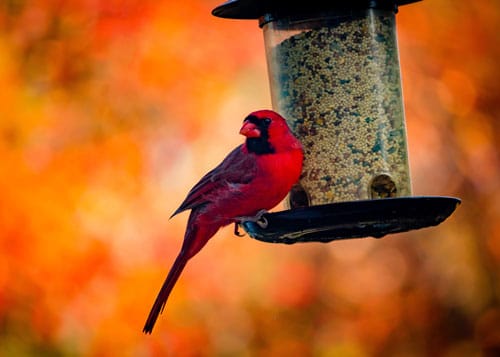 Bird seeds are the classic way to attract more birds to your yard. But not all birds have the same taste in food, and different bird seeds will attract different types of birds. The biggest mistake bird lovers make is putting bird seeds in their backyard to attract the birds they want to see, without also feeding the birds that already live there. Birds are very social animals, and it’s best to begin by feeding the birds that already live nearby while also adding feed that will attract the birds you’re interested in seeing.
Sunflower Seeds
Sunflower seeds are by far the most common seed for feeding backyard birds. Not only does this common seed feed many kinds of birds, but it’s also convenient for putting into many kinds of feeders. Black oil sunflower seeds are the most common and make an excellent seed for attracting songbirds. Larger striped sunflower seeds are great for larger birds who have stronger bills. Hulled sunflower kernels and chips are also great for smaller birds because they are easier to eat. Sunflower seeds are great for attracting chickadees, house finches, jays, cardinals, sparrows, woodpeckers, goldfinches, and doves. But beware! Sunflowers also attract squirrels and chipmunks. Be sure to choose a bird feeder that is pest-proof. If you live in rural areas, bird feeders can also attract larger animals like bears. Keep your bird feeder close to the house to deter any larger hungry animals.
Other Bird Seeds
While sunflower seeds remain the most popular for feeding the birds, there are other kinds of seeds that are great for attracting different types of birds. Nyjer is a small, thin birdseed that’s high in oils and fats, making them particularly great for winter bird feeding. These small seeds are well-loved by goldfinches, purple finches, redpolls, pine siskin, and quails. Because of their small size, they are prone to blowing around in strong winds. Choose a mesh style or sock feeder to hold this seed for feeding birds.
Millet is another common birdseed and a common component of many birdseed mixes. This is great for different kinds of bird feeders and is loved by doves, sparrows, juncos, quails, wild turkeys, and buntings. While it often comes in birdseed mixes, you can also buy it all on its own.
Safflower seeds are large with a thick shell that require a big sturdy beak for eating. This is a popular seed choice for those with a squirrel problem as squirrels aren’t a fan of this seed. It’s perfect for use in many kinds of feeders such as hoppers, tubes, or platform feeders. Safflower seeds are great for attracting larger birds such as cardinals, nuthatches, jays, woodpeckers, and house finches.
Cracked corn is an affordable and easy option for feeding birds. Loved by sparrow, jays, towhees, grouse, quail, doves, blackbirds, ducks, and wild turkeys, cracked corn is great for both ground feeding, hoppers, and tray feeders. While it’s typically added as a carbohydrate filler for many bird feeds, it can also be used all on its own.
Suets
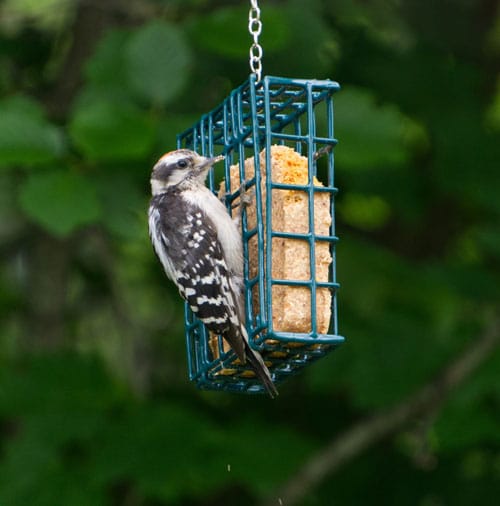 Suet is a whole other style of bird feed that is popular, nutritious, and especially great during the fall and winter months because of its high-fat content. Suet is high in calories and is made from rendered fat and a blend of seeds, grains, nuts, and bits of fruit to attract an even greater variety of birds. Coming in a cake shape and working as a brick of bird food, it’s best to hang suet cakes in cages for easy feedings. Many large and small birds eat suet including different kinds of woodpeckers, jays, wrens, chickadees, robins, cardinals, thrushes, orioles, and blackbirds. Sometimes even larger birds like hawks can be attracted to suet. The species of birds that will decide to feed on your suet depends on the type of suet, the feeder style, the season, and what other foods are available.
Hummingbird Feeders
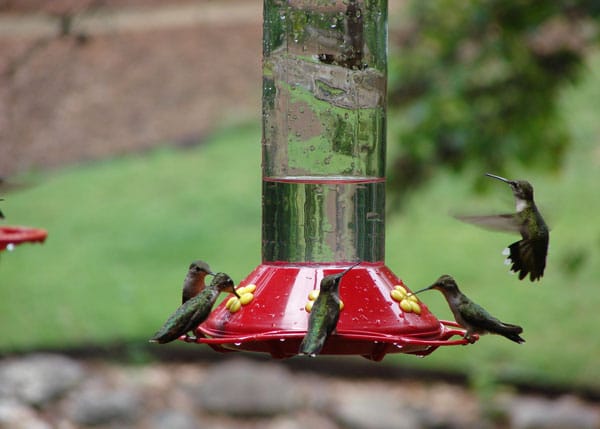 Hummingbird feeders are designed to only attract hummingbirds, which don’t eat seeds. These miraculous little birds love nectar, and by making a sugar-water mixture you can mimic the nectar and attract them. Fill a hummingbird bird feeder with sugar water and you will be attracting hoards of hummingbirds in no time. Choose a bright red hummingbird feeder as these birds are attracted to the color red.
Natural Food Sources
In addition to seed, suet, and sugar water sources of feed, you can also explore including elements in your landscaping that will attract birds naturally. Natural food sources such as flowers, trees, shrubs, and insects are a great way to attract more birds to your backyard. Minimizing the use of insecticides will greatly increase the number of birds who come to your yard for lunch.
If you are a bird lover, try some of these feed combinations to attract your favorite birds to your backyard. You will have some new avian friends in no time.